
Waking several times during the night, feeling that the bladder never empties completely and struggling to hold on: if you are over 50 and recognise these signs, know that you are not alone.
What happens to the prostate after age 50?
The prostate is a small gland surrounding the urethra, the tube through which urine passes. With age and under the influence of hormonal changes, particularly increased conversion of testosterone to DHT, the gland can enlarge.
This creates increasing pressure on the urethra, leading to symptoms many men know all too well: a sudden urge to urinate, a weak or interrupted stream and frequent nighttime urination.
According to data from the Italian Society of Urology (the 2017 #Controllati campaign, involving around 2,000 Italian men and published in the Italian Archives of Urology and Andrology), urinary symptoms are common in this age group.
The most studied plant for prostate support: Serenoa repens
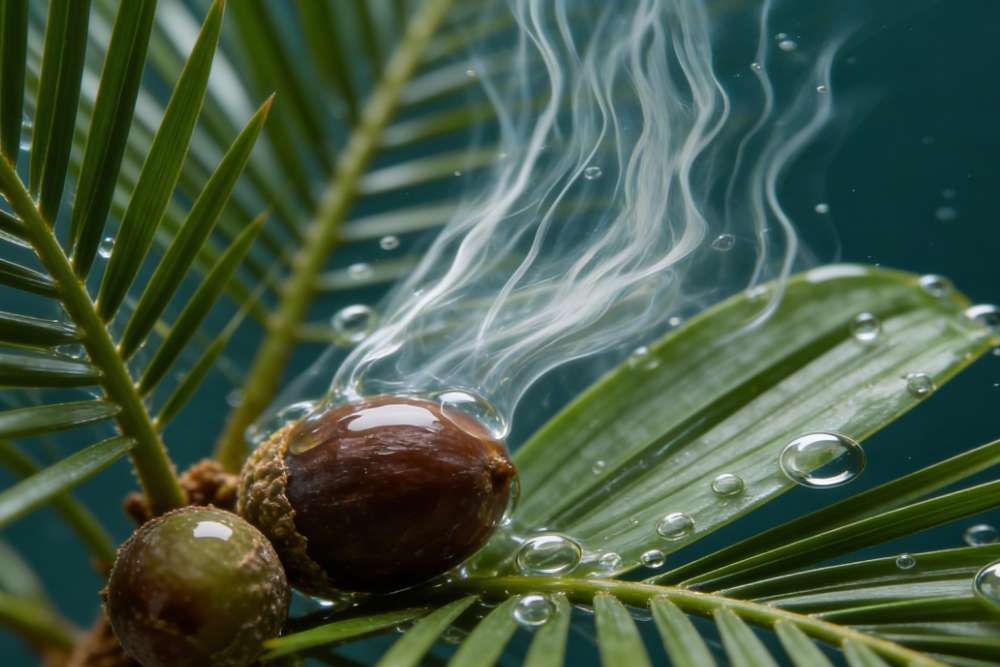
When it comes to natural support for prostate health, Serenoa repens is a key starting point. It is one of the most studied plants in this area, with decades of research on its potential benefits.
Its main active ingredient isbeta-sitosterol, a phytosterol that may inhibit the enzyme 5-alpha-reductase, which converts testosterone into DHT, a hormone involved in prostate growth.
In practical terms, clinical studies report improvements mainly in symptoms that affect daily life, such as nocturia (nighttime awakenings to urinate) and urinary flow.
An important point for long-term consideration: Serenoa repens does not lower PSA, the marker that doctors monitor for prostate health, and does not interfere with it in the way some medicines can.
Effectiveness depends greatly on the extract’s standardisation (the guaranteed percentage of active ingredient). Research has identified reference doses for certain standardised lipid extracts.
Not just highly standardised Serenoa, but a complete formula
PROSTAHELP was designed to provide Serenoa repens at a specified standardisation, 480 mg of dry extract per dose, alongside complementary ingredients that address other aspects of prostate discomfort, from inflammation to tissue congestion.The combined action of nettle root, Serenoa, bromelain, meadowsweet and grape-seed extract is intended to support fluid drainage and provide decongestant and anti-inflammatory support.
PROSTAHELP is designed for people seeking targeted support with concentrated plant extracts. It is gluten-free, lactose-free, preservative-free and suitable for vegans.
A course of at least 60 days is recommended, with 1 or 2 capsules a day before main meals. Early changes, such as a smoother urinary flow and fewer nighttime awakenings, may be noticed within 4–6 weeks; completing the course is important. If you take medication, particularly for prostate conditions, consult your doctor first.

Frequently asked questions
Can benign prostatic hyperplasia turn into cancer?
No. BPH and prostate cancer are distinct conditions; one does not develop into the other. Scientific studies have not established a causal link between the two, although they can occur in the same person. Regular check-ups, including PSA testing, ultrasound and urological assessment, remain important.
When is the right time to start thinking about it?
Earlier than many people think. Data from the Italian Society of Urology suggest that early signs of BPH can appear in men aged 50–60. Waiting until symptoms become troublesome may mean missing an opportunity to discuss preventive support. Anyone with a family history of BPH should discuss this with a healthcare professional.
Can Serenoa repens be taken long term?
It has been studied for continued use, but suitability depends on the person and their circumstances. Unlike some BPH medicines, it may have a different side-effect profile; discuss long-term use and any other medication with a healthcare professional.