

The best way to fight and eliminate any kind of infection (viral or bacterial) is certainly to keep our immune system efficient and ready to respond to any eventuality.
To do this, a multifactorial approach is needed, ranging from a balanced diet and optimal stress management to taking vitamins (especially C and D), antioxidants, immunomodulators and stimulants.
What is the immune system?
As a whole, the immune system consists of a complex integrated network made up of three fundamental components that generate the immune defences the body needs:
– organs;
– cells;
– chemical mediators.
The organs are located in different parts of the body (spleen, thymus, lymph nodes, tonsils and appendix) and lymphatic tissues. We can distinguish between:
– primary lymphoid organs (bone marrow and, for T lymphocytes, the thymus), where leukocytes (white blood cells) develop and mature;
– secondary lymphoid organs with a reticular structure suited to trapping foreign material found in the blood (spleen), lymph (lymph nodes), air (tonsils and adenoids), food and water;
– isolated cells found in the blood and tissues: the main ones are called white blood cells or leukocytes.
How the immune system works
The immune response takes place in two phases: an NON-SPECIFIC response and a SPECIFIC response.
In most cases, the non-specific response is already able to counter many pathogens every day without symptoms or with only mild symptoms. More serious infections, however, require activation of a specific immune response. This response is TARGETED at a particular pathogen and is slower, but once activated it leads to the resolution of the infection.
Here is a simplified overview of what happens when a pathogen enters our body.
NON- SPECIFIC RESPONSE: the first cells to act are macrophages, which function like ever-vigilant security guards. Their job is to RECOGNISE the pathogen and engulf it by phagocytosis so it can be eliminated quickly. As they do this, macrophages ALERT nearby macrophages, which then join the response in large numbers. An inflammatory process is triggered. If macrophages cannot stop the infection, they alert the GRANULOCYTES (through a chemotactic signal to the endothelium). Granulocytes, in particular, encapsulate the site of infection to prevent or at least slow the spread of the pathogen into surrounding tissue. They also present the pathogen’s specific antigen, thereby stimulating T lymphocytes and then B lymphocytes to produce specific antibodies.
SPECIFIC RESPONSE: T and B lymphocytes perform different functions during this phase. B lymphocytes produce antibodies that bind to the pathogen’s antigens, preventing it from further damaging human cells. At different stages of the disease, these cells produce different types of antibodies, which allow us to assess the progress of the immune response.
Broadly speaking, lymphocytes include two types of cells, known as T4 (CD4) and T8 (CD8). T4 lymphocytes present antigens to other lymphocytes and therefore act as messengers. T8 lymphocytes seek out and destroy cells infected by pathogens and thus rendered dysfunctional.The specific response is activated by the immune system during a bacterial or viral infection.
How to strengthen the immune system: support from herbal medicine

For this whole process to take place quickly and efficiently, it is important to follow a balanced diet rich in vitamins, trace elements (enzyme activators) and minerals.
Stress must also be kept under control to limit circulating “free radicals” and allow our antioxidant systems to counter them, preventing a chronic inflammatory state that would weaken the entire system.
Unfortunately, diet alone does not always provide sufficient amounts of these substances, so supplementation with specific herbal products may be necessary. However, choose supplements that provide vitamins from natural plants, for example. Synthetic vitamins do not have the same beneficial effect.
For example, VITAMIN C is widely recognised as very important both as an antioxidant and for stimulating the immune system. To obtain sufficient amounts from natural sources, choose vitamin C derived in particular from two plants: ACEROLA and ROSEHIP.
We can also add active ingredients with direct antiviral and antibacterial properties, such as ELDERBERRY FRUITS, which help counter various pathogens. Or ECHINACEA, traditionally used as a “natural antibiotic” and to directly stimulate the immune system.
The ASTRAGALUS, which stimulates macrophages and NK cells, activating and improving the responsiveness of the non-specific immune system, shortening its reaction time and accelerating recovery. LAPACHO has significant antibacterial activity. Finally, GINGER, known for its distinctive flavour, also strongly stimulates the immune system and helps the body absorb other plants taken at the same time.
Recovering quickly after the immune system’s battle
Illness also increases inflammation and the amount of circulating free radicals. Therefore, both for prevention and recovery from flu-like illnesses, it is good practice to use specific antioxidants.
Counteracting free radicals to detoxify the body
To quickly detoxify the body and counter free radicals, we can use antioxidant-rich plants to detoxify organs and tissues from an excess of accumulated free radicals.
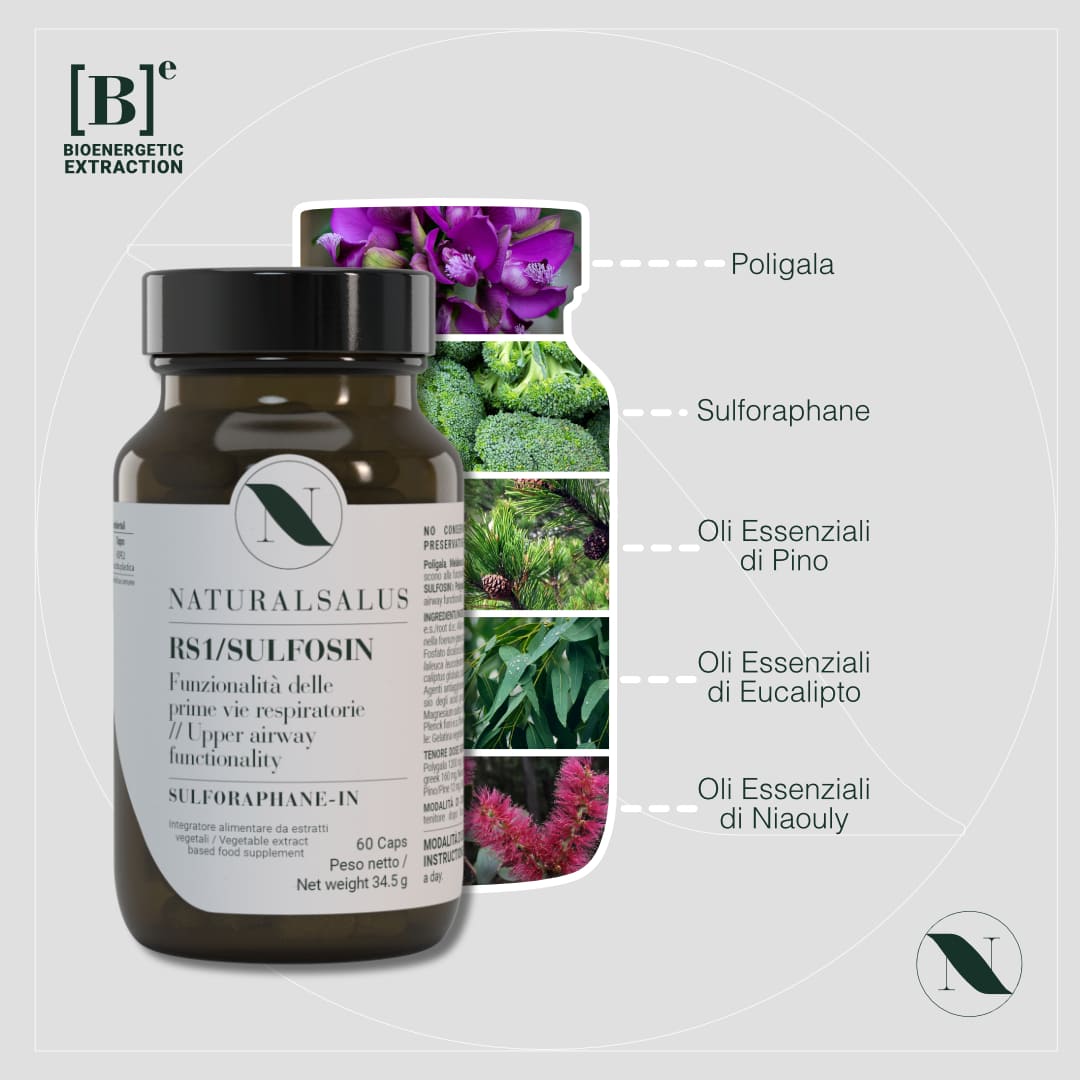
One of the most effective plant families for countering free radicals is the brassica family , which contains high concentrations of sulforaphane. In its pure form, sulforaphane acts as an indirect antioxidant by inducing the activity of Phase II detoxification enzymes and activating endogenous mechanisms that help cells protect themselves against oxidative damage. It can therefore protect every cell from toxic and aggressive molecules, namely free radicals. The effects of these indirect antioxidants remain active even after they have been eliminated, as they trigger a cellular protection process that can continue to be effective for days.
Resveratrol is an antioxidant found in grape skins and red wine, with high antioxidant capacity. Through its antioxidant action, it can also help protect blood vessels.
The legendary plant He Shou Wu comes from traditional Chinese medicine and is reputed to promote strength and vitality. It contains various phytochemicals, including polyphenols and stilbenes, which make He Shou Wu an effective antioxidant.
It is clear that the immune system protects the body against pathogens and launches a counterattack. Other organs also support the immune system, albeit indirectly. The skin, for example, acts as a barrier against the outside world, limiting pathogens’ access to the body. The skin can perform this function only when intact and healthy. The same concept applies to the digestive tract and excretory organs, whose activity and enzymes help counter the formation of potential pathogens and promote their elimination.
Supplements for the immune system
Herbal medicine recommendation:
• Combine IS1 ANTOXI PLUS (2 capsules a day) + IS3 MIRABILUS IMMUNO PLUS (10 ml twice a day). Use from October to February.
• IS2 ANTOXI PLUS FLUID, for detoxification and liver cleansing: 10 ml per day. Use in March, June and September.
• IS3 MIRABILUS IMMUNO PLUS is also recommended during seasonal changes, such as spring to summer and summer to autumn. At the first signs of respiratory symptoms, increase the dose to up to 4 measuring cups per day.
• IS1 ANTOXI PLUS is recommended year-round for antioxidant action and powerful anti-ageing support for the skin (face, neck and hands).
Research sources
Erwin-Josef Speckmann, Jürgen Hescheler, Rüdiger Köhling, Physiologie Elsevier.
Karim M Yatim, Fadi G Lakkis, A brief journey through the immune system. Clin J Am Soc Nephrol. 2015 Jul 7;10(7):1274-81. doi: 10.2215/CJN.10031014. Epub 2015 Apr 6.
Michele Catanzaro, Emanuela Corsini, Michela Rosini, Marco Racchi, and Cristina Lanni, Immunomodulators Inspired by Nature: A Review on Curcumin and Echinacea. Molecules. 2018 Nov; 23(11): 2778. Published online 2018 Oct 26. doi: 10.3390/molecules23112778
Anitra C Carr, Silvia Maggini, Vitamin C and Immune Function. Nutrients. 2017 Nov 3;9(11):1211. doi: 10.3390/nu9111211.
Zhi-Peng Li, Hong-Bing Liu, Quan-Wei Zhang, Li-Feng Li, Wan-Rong Bao, Dik-Lung Ma, Chung-Hang Leung, Zhao-Xiang Bian, Ai-Ping Lu, Quan-Bin Han. Molecules. 2018 Jun 28;23(7):1563. doi: 10.3390/molecules23071563. Interference of Quercetin on Astragalus Polysaccharide-Induced Macrophage Activation.
L Macedo, T Fernandes, L Silveira, A Mesquita, A A Franchitti, E A Ximenes, β-Lapachone activity in synergy with conventional antimicrobials against methicillin-resistant Staphylococcus aureus strains. Phytomedicine. 2013 Dec 15;21(1):25-9. doi: 10.1016/j.phymed.2013.08.010. Epub 2013 Sep 12.
Claudio Andrés Álvarez, Andrés Barriga, Fernando Albericio, María Soledad Romero, and Fanny Guzmán, Identification of Peptides in Flowers of Sambucus nigra with Antimicrobial Activity against Aquaculture Pathogens. Molecules. 2018 May; 23(5): 1033. Published online 2018 Apr 27. doi: 10.3390/molecules23051033.